
The dyslexic advantage: A love letter to parents (part one)
Why your child’s beautiful, different brain is their secret superpower
From Pauline Findlay, a dyslexic adult who wants you to know it’s not just going to be okay, it’s going to be an incredible journey.
Dear parent,
Your child has just been diagnosed with dyslexia. I know what you are thinking. How are they going to get through school? How are they going to get high enough marks to get into a good university? How will they compete in the workforce? Why are they not as smart as all the other kids in their class?
Maybe you’ve been watching your child struggle with reading while their friends or siblings race ahead. Perhaps you’ve noticed they’re brilliant at building things, solving puzzles, or creating stories, but homework time turns into a battlefield every single night.
I understand because I’ve been where your child is right now. And I want to tell you something that might change everything about how you see this moment: You’re not looking at a problem. You’re looking at a gift.
Let me share my story, and then we’ll talk about the incredible journey ahead for your child.
The girl who saw words dance
When I was your child’s age, letters would literally dance on the page. ‘b’ would flip to ‘d’ mid-sentence, words would rearrange themselves when I wasn’t looking, and reading felt like trying to solve a puzzle while someone kept changing the pieces. It also made me feel physically sick, which people rarely talk about with dyslexia.
My teachers were puzzled. Here was a girl who could tell elaborate, creative stories, who understood complex concepts when they were explained verbally and solved problems that stumped other children. But put a book in front of me? Disaster. The words looked like they were underwater, and I wasn’t wearing goggles!
Sound familiar?
For years, I felt different. Like everyone else had received an instruction manual for reading that somehow skipped me. I watched other kids effortlessly read while sounding elegant, while I wrestled with every sentence. The words meant nothing. They were just letters on a page and my reading was so slow I put my peers to sleep.
But here’s what nobody told me then, and what I’m desperate for you to understand now: My brain wasn’t broken. It was just wired for greatness in a way the world didn’t recognise yet.
I found it easier to process information visually not verbally. This of course isn’t ideal in our school environment, that expects everyone to learn the same way, to achieve the same results. The system really lets dyslexic students down, but you don’t need to.
The plot twist: When different became powerful
Fast forward through the years of struggle, creative workarounds, and slowly building confidence. Today, as I write this blog post, I want you to know what that “broken” dyslexic child grew up to achieve:
- A master’s degree (yes, the kid who couldn’t read properly)
- A film school graduate (where my visual thinking became my greatest asset)
- A published novelist (the ultimate irony is the child who struggled with words now creates worlds with them.)
- A successful entrepreneur helping other people unlock their potential through story.
But here’s the real plot twist: I didn’t succeed despite my dyslexia. I succeeded because of it.
Every single achievement on that list happened because my dyslexic brain works differently. My dyslexia is my superpower, and your child’s dyslexia will be theirs too.

The magic hidden in your child’s beautiful brain
Let me tell you what I wish someone had told my parents when I was struggling with reading exercises.
Your child sees the big picture
While other kids get lost in the details, dyslexic children see the whole forest. When I was in film school, while my classmates were focused on individual shots, I could visualise entire story arcs. When I wrote my novel, I could see the complete narrative structure before I wrote a single word. I could see the entire book in my head.
Your child probably does this too. They might struggle to read individual words, but they can tell you exactly what’s happening in the pictures. Thank goodness for audio books! They might have trouble with spelling tests, but they can explain complex ideas with clarity.
This is not a consolation prize. This is a rare gift.
Your child is a natural problem-solver
Dyslexic brains are wired for creative solutions. Every day, your child figures out workarounds for a world designed for neurotypical brains. They develop resilience, creativity, and innovative thinking just by navigating daily life.
When I was studying for my master’s, I created visual slides in Canva before writing up reports to turn in for marking. When I write a script or a book now, I visually outline it first, print it in A2 and frame it like a movie poster. I write the script from the visual story. I developed visual techniques that became my signature process. Every challenge has forced me to innovate.
Your child is already doing this. Every time they find a way around a reading difficulty. Every time they show you their homework using pictures instead of just words. Every time they explain something in their own unique way. They’re developing the exact skills that make adult dyslexics so successful in creative fields, entrepreneurship, and innovation.

Your child thinks in 3D
While most people think in words, dyslexic brains think in pictures, patterns, and spatial relationships. This is why so many dyslexic adults become architects, engineers, artists, inventors, and filmmakers.
I can literally see story structures in my mind like architectural blueprints. When I’m writing, I don’t just think about words, I see scenes, I feel emotions, and I experience the story in colourful dimensions. It might take me longer but my process is richer.
Your child probably does this too. They might struggle to read about photosynthesis, but they can probably visualise exactly how it works. They might have trouble with math problems, but give them blocks or visual aids, and watch them solve complex concepts.
When I was working in a bank in my early 20’s, I was able to see complex spreadsheets in my mind’s eye.
The success stories they don’t tell you
The education system tends to focus on what dyslexic children can’t do. But let me tell you about what we can do and what your child will be able to do:
Richard Branson (Virgin Group founder) credits his dyslexia for his ability to simplify complex problems and see opportunities others miss. Richard has just joined forces with the charity Made By Dyslexia to launch the first free online University for Dyslexic Thinking. I never thought I would see a dyslexic university!
Steven Spielberg didn’t get diagnosed with dyslexia until he was 60, but his dyslexia shaped his visual storytelling genius from childhood. “As dyslexics, we don’t just read the words, we visualise the characters, imagine the locations and transport ourselves there!”
Barbara Corcoran (Shark Tank investor) says her dyslexia taught her to think outside the box and find creative solutions in business. She said she was labelled “the dumb kid” in school and struggled with reading and writing. Now she’s one of the leading women in business in America.
Whoopi Goldberg transformed her struggles with traditional learning into comedic genius and acting success. Whoopi memorised lines or had someone read the script to her or she used recordings to remember the lines.
And then there’s me, Pauline Findlay the girl from Brisbane, who isn’t famous but who is now helping others through writing, film, and storytelling. The 13-year-old me would find it hard to believe that I would eventually write novels, films and plays.
Continue to part two…
Feel free to reach out to me at pauline@paulinefindlay.com
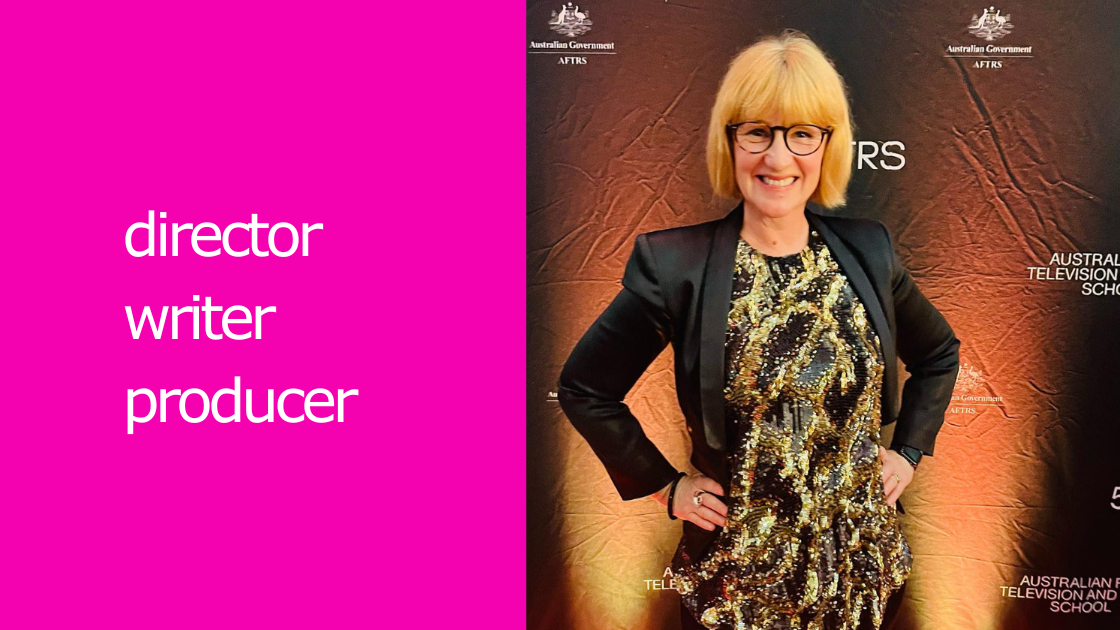
I’m a dyslexic filmmaker, author, story mentor and educator. Yes, I see things differently and so does your child.
I’m available for key-note speeches and can facilitate programs at schools for students, teachers and parents so they can better understand the gifts of dyslexia.
I work with people from all backgrounds. I’ve taught students with mental health issues, cerebral palsy, neurodivergent, deaf and hard of hearing since 2013.
All my courses are accessible. The videos are closed captioned and transcribed. Learn More